Commercial TPO Roofing in Euless, TX
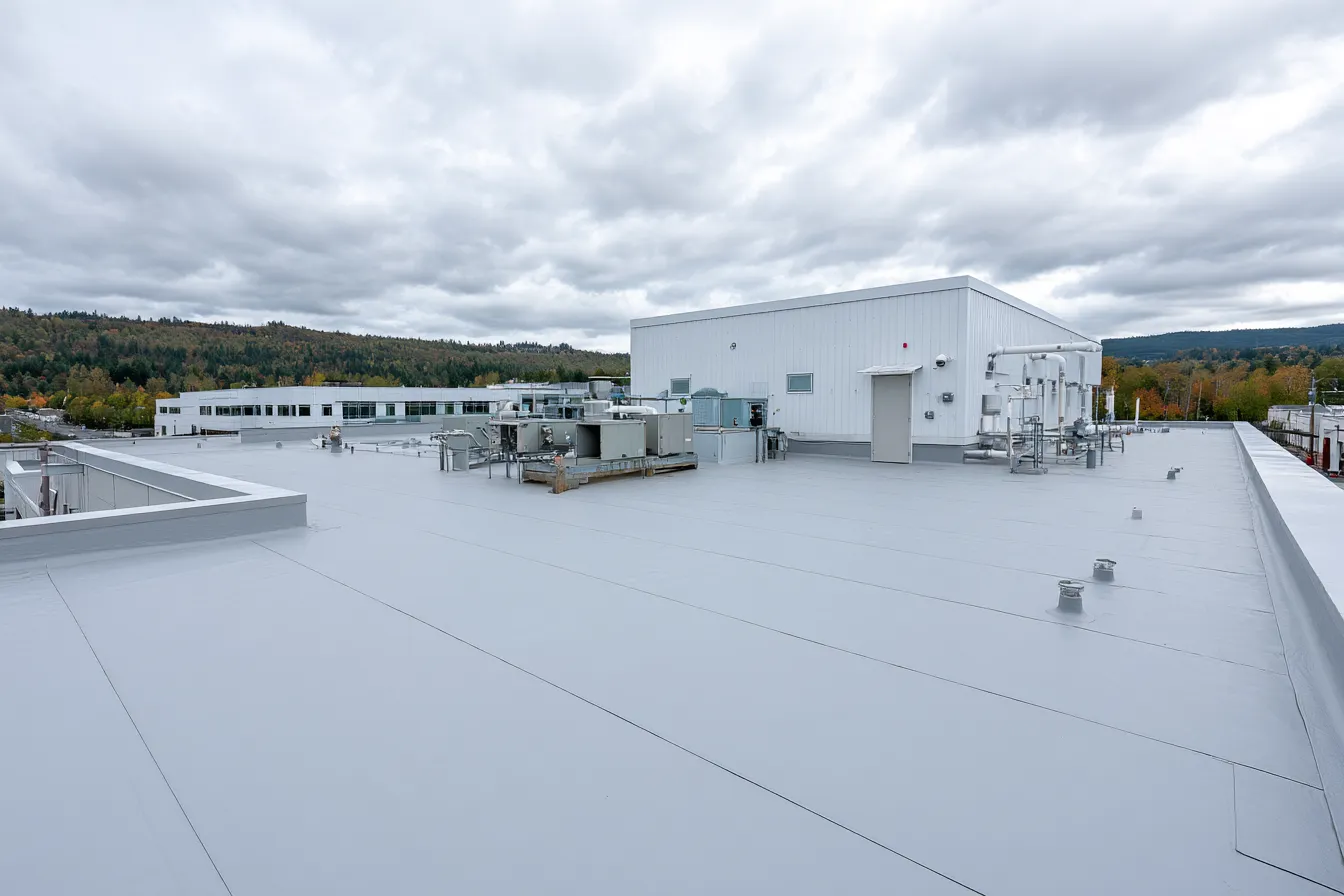
Walk the newer retail and light-industrial roofs around Euless and most wear white TPO, a single heat-welded sheet sealing a low-slope deck. Commercial TPO roofing in Euless, TX stands on two things a bid rarely spells out: the sheet's thickness and how it is anchored.
- The sheet gauge and how it is anchored, in writing
- Every heat-weld probed, not just eyeballed
- A repair, a recover, or a new membrane, priced once
Call (817) 318-7069
What commercial TPO roofing does for a Euless building
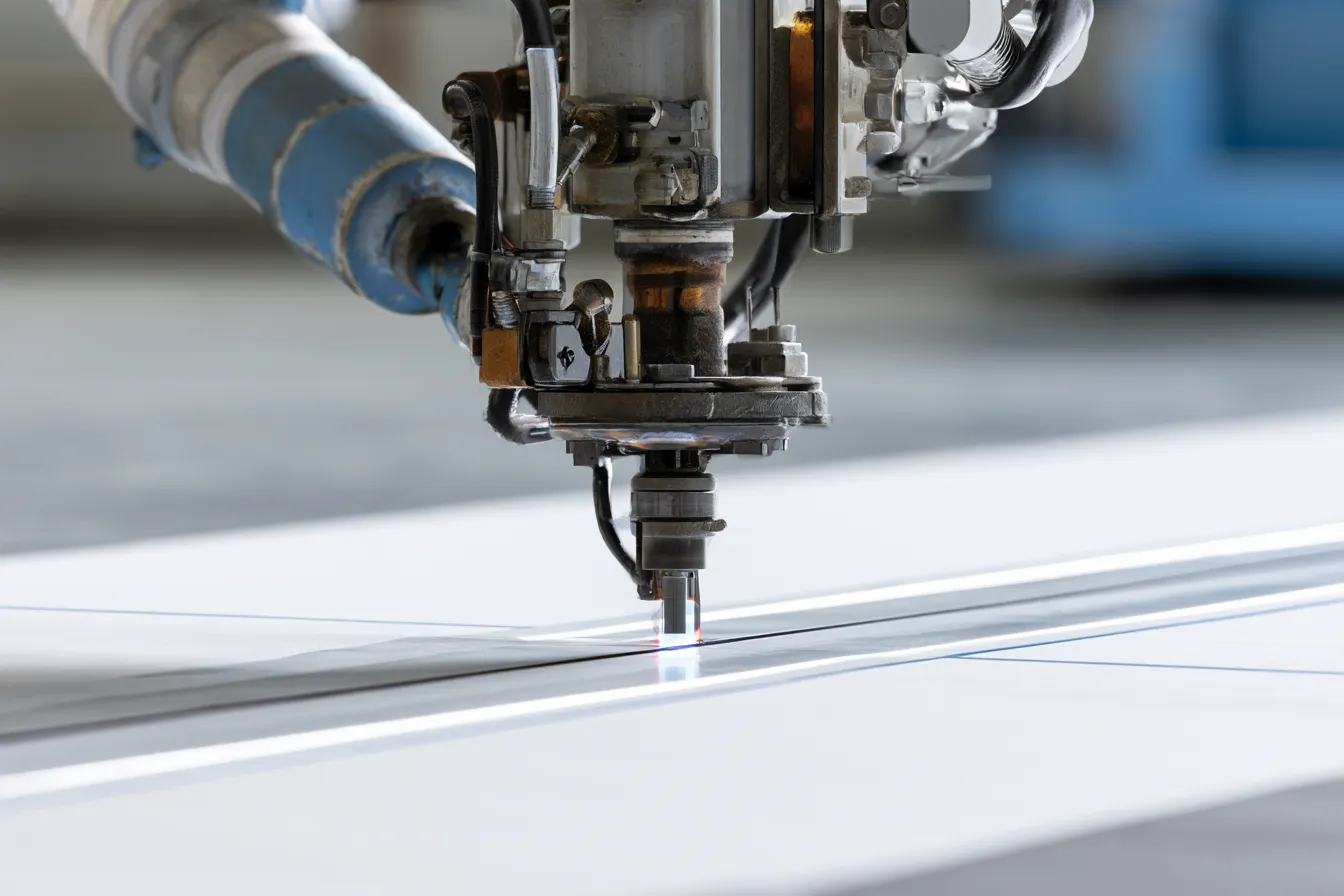
TPO is a thermoplastic membrane: a single plastic sheet flexible enough to roll out across a deck and then be welded, not glued, at every overlap into one unbroken surface. It welds watertight, and its pale face throws back the North Texas sun.
Where a TPO job goes right or wrong is out of sight from the lot. A roofer measures the sheet's mil gauge, states whether it is screwed down through the insulation or glued in full, and heat-welds and then probes each seam, writing all of it into the scope before a dollar figure is attached.
What a TPO scope names before a price
Reading a tired TPO roof, or specifying a new one, reduces to a handful of items a facility owner can see on the page before any number.
- 01The mil gauge, sized to the traffic and the hail
- TPO ships in gauges, most often 45, 60, and 80 mil, and the number is not a formality: a heavier sheet shrugs off dropped tools, the boots that cross it on every HVAC service call, and the hail Tarrant County throws. A roofer sets the gauge against how busy the rooftop is and how long you intend to own the building, not against the lowest bid's thinnest option.
- 02Screwed down or glued in full
- A TPO sheet is held to the deck one of two ways: mechanically, with fastener plates driven through the insulation on a grid, or fully adhered, glued across its whole underside. Adhered lies flatter and grips harder against wind lift on an exposed roof near open airport land; mechanically fastened costs less and goes down faster. A roofer picks for the building's height and exposure and writes down which.
- 03The welds, made and then tested
- Overlaps are joined with a hot-air welder that melts the two sheets into one, and a good crew does not stop at making the weld: they drag a probe along the cooled seam looking for a stretch that skinned over without truly fusing. That un-fused inch is the pinhole a driving Texas rain will find, so the test matters as much as the torch.
- 04What sits under the sheet
- The membrane is the lid; beneath it lie the insulation boards that carry the roof's R-value, its resistance to heat moving through, and give the sheet a firm bed. A roofer reads whether those boards are dry, thick enough for the energy target, and still fastened flat, because soft or soaked insulation wastes the cooling savings and lets the sheet flutter loose in wind.
- 05Reflectivity, and what the code asks
- A white TPO top coat sends daylight back rather than storing it, which can ease the compressor load on a conditioned store or a full airport hotel through a long cooling season. Whether the adopted energy code also expects that reflectance is a question a roofer answers off the current code on file, not with a blanket yes or no.
Damage on a flat roof stays hidden: a hail-bruised sheet or a lifted weld shows nothing from the parking lot. The storm damage page covers what a hailstorm leaves on a low-slope roof, and the flat roof and EPDM guide takes up drainage and the wider system choice.
What Euless owners ask about TPO roofs
Questions that land before a facility owner commits a Euless building to a TPO roof.
Q1Why is TPO on so many of the newer buildings around here?
Q2What gauge of TPO should go on my roof?
Q3Should the membrane be mechanically fastened or fully adhered?
Q4Does the white surface really lower our cooling costs?
Q5Can a TPO roof survive the hail we get?
Get your Euless TPO roof scoped in writing
Send the building to Euless Roofing Co and a local commercial roofer climbs it, reads the membrane and every seam, states the gauge and the anchoring method, and hands back one scope and one price to hold until you say go. The read costs nothing either way.