
Commercial Roofing in Euless, TX
The retail strips and light-industrial buildings along the SH-121 and 183 corridor near DFW Airport run flat, not shingled. A local roofer walks the membrane and grades every seam before quoting a number.
- The scope and cost written down first
- Claim paperwork explained in plain English
- No sales pitch at the door
Call (817) 318-7069
A corridor of different buildings, each asking a different roof
The commercial roofs along SH-121 and 183 rarely wear shingles. A Glade Parks retail strip, a restaurant pad, a self-storage block, and light-industrial buildings toward DFW Airport sit under a flat or low-slope roof: a welded single-ply membrane, built-up asphalt, or a coating. What each asks is not the same.
So a local roofer reads the building first, the deck, drains, seams, and trapped moisture, each checked and set down with dated photographs, so its state is on record before anyone names a system or number. It opens with a no-cost inspection.
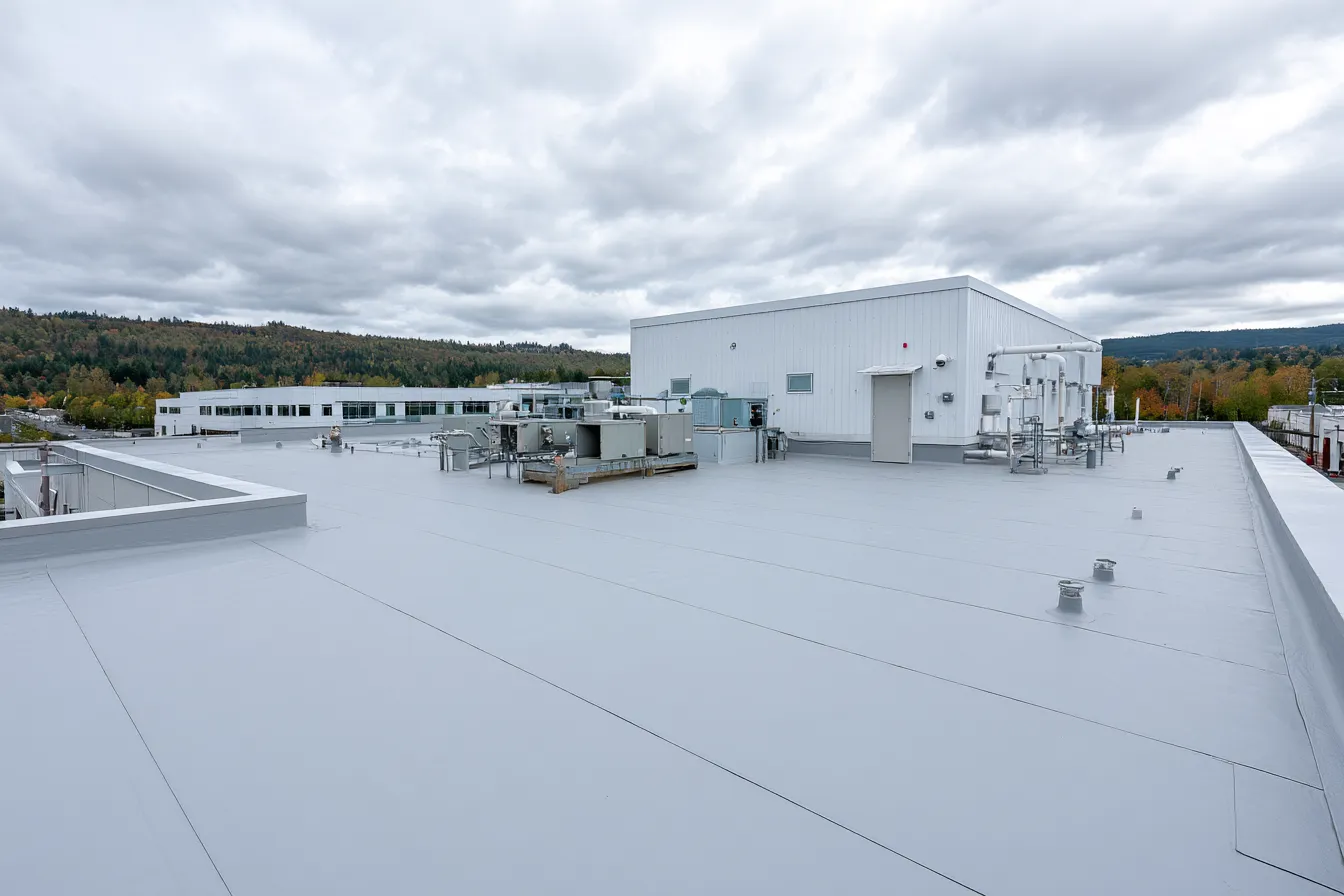
The flat systems that go on these buildings, and where each fits
There is no single best flat roof, only the one that suits the building. What decides it is how the deck sheds water, how often crews are up top servicing rooftop units, whether a kitchen or shop hood vents across the field, and how many more years you intend to own the place. The roofer settles on a system only once the roof has been read and put on paper. What follows are the low-slope roofs installed and serviced on Euless buildings, from a Glade Parks storefront to a warehouse on the airport side.
TPO
The pale single-ply most local retail lands on: a thermoplastic membrane whose seams are fused with hot air into one watertight run. That light color turns the summer sun away rather than holding it, easing what the rooftop cooling has to fight through a Texas August.
Read the full page →EPDM
Black rubber, plain and durable, a sheet built to last on a big empty roof. It runs for decades with little upkeep over a warehouse or a stretch of light-industrial floor, which is much of what sits on the airport side of town.
PVC
A welded membrane that stands up to what a kitchen throws at a roof. Grease, animal fats, and fryer oils that soften ordinary sheets slide off it, so a restaurant pad or any building exhausting a hood upward is where it belongs.
Modified bitumen
Asphalt reinforced and stacked in overlapping plies, a membrane that shrugs off steady foot traffic and a corner slow to drain. You find it on the smaller roofs someone is up on regularly to tend the rooftop equipment.
Built-up roof (BUR)
Tar and gravel in the old style, ply over ply until the roof is thick and redundant. It costs more labor than a rolled sheet, yet decades of proven service explain why it still tops many of the area's older buildings.
Roof coatings
A silicone or acrylic coat rolled or sprayed across a roof that is worn but still solid beneath, adding reflective years back for a fraction of a tear-off. It only works if the roof tests dry first; over wet insulation the coat seals the water in instead.
Read the full page →Not sure what is even up there, or what a rough Tarrant County hail run has quietly taken out of it? The read is what answers that: the roofer identifies the membrane, puts a number on the life it has left, and dates any storm bruising, all before you have to choose between a repair and a full re-roof. For what a flat-roof repair or replacement tends to run, the roofing cost guide lays out ranges by system.
From a single seam to a full re-roof, and choosing between them
Nearly every commercial job here fits one of four buckets. Your roofer sorts your building into the right one and names the choice in writing well before a crew shows up.
- 01A repair kept to the failure
- One failure fixed on its own rather than the entire roof: a seam starting to creep, a drain that keeps a puddle, a worn run of parapet flashing, or a leak where a rooftop unit meets its curb, each traced and tied back to whatever membrane is already in place.
- 02A coating, only where the roof earns it
- When the deck under the membrane tests dry and structurally sound, a sprayed silicone or acrylic coat can restore the surface and add years back for a small share of a full replacement. Over insulation that has already taken on water it only seals the trouble in, so the moisture check always comes first, never after the quote.
- 03A full re-roof when the system is spent
- A brand-new low-slope system, whether single-ply, modified bitumen, or built-up, engineered and anchored to stand the wind that sweeps the open highway, chosen only once a roof is truly finished and no patch is worth throwing after it.
- 04The honest patch-or-replace sort
- Whether a coat is money well spent or a tear-off is the right answer comes down to four things: how much the roof gets walked, whether water is sitting in the insulation, what shape the deck is in, and how long you intend to keep the building. A roofer measures all four before advising, not once the work is sold.
Hail treats a flat roof no differently than a pitched one, except that the damage stays out of sight: a bruised membrane or a torn seam gives nothing away from the parking lot. Local roofers catch it on camera and pin it to a date on that first visit, then gives you a straight read on whether a claim is worth filing.
Before you commit a building to a new flat roof
Plain answers on picking a system, storm damage, working around your tenants, and where the warranties sit.
Q1Half the roof is failing and half looks fine. Can I replace only the bad section?
Q2The building carries a dozen rooftop AC units. Does the foot traffic wear a flat roof out faster?
Q3This building is one we will only keep a few more years. Is a coating the smarter spend over a new roof?
Q4Our roof is not old, but a tenant keeps reporting a drip. What is going on?
Q5If a storm totals the membrane, who documents the damage, and does Euless Roofing Co file the claim?
Q6On a new commercial roof, who actually stands behind it, the manufacturer or the roofer?
Get a documented read on the building roof.
A commercial roofer reads the membrane and flashings in person and writes a clear scope and budget line for the building. Nothing is owed for the assessment, and you act on it when it fits.