
Commercial Flat Roof in Euless, TX
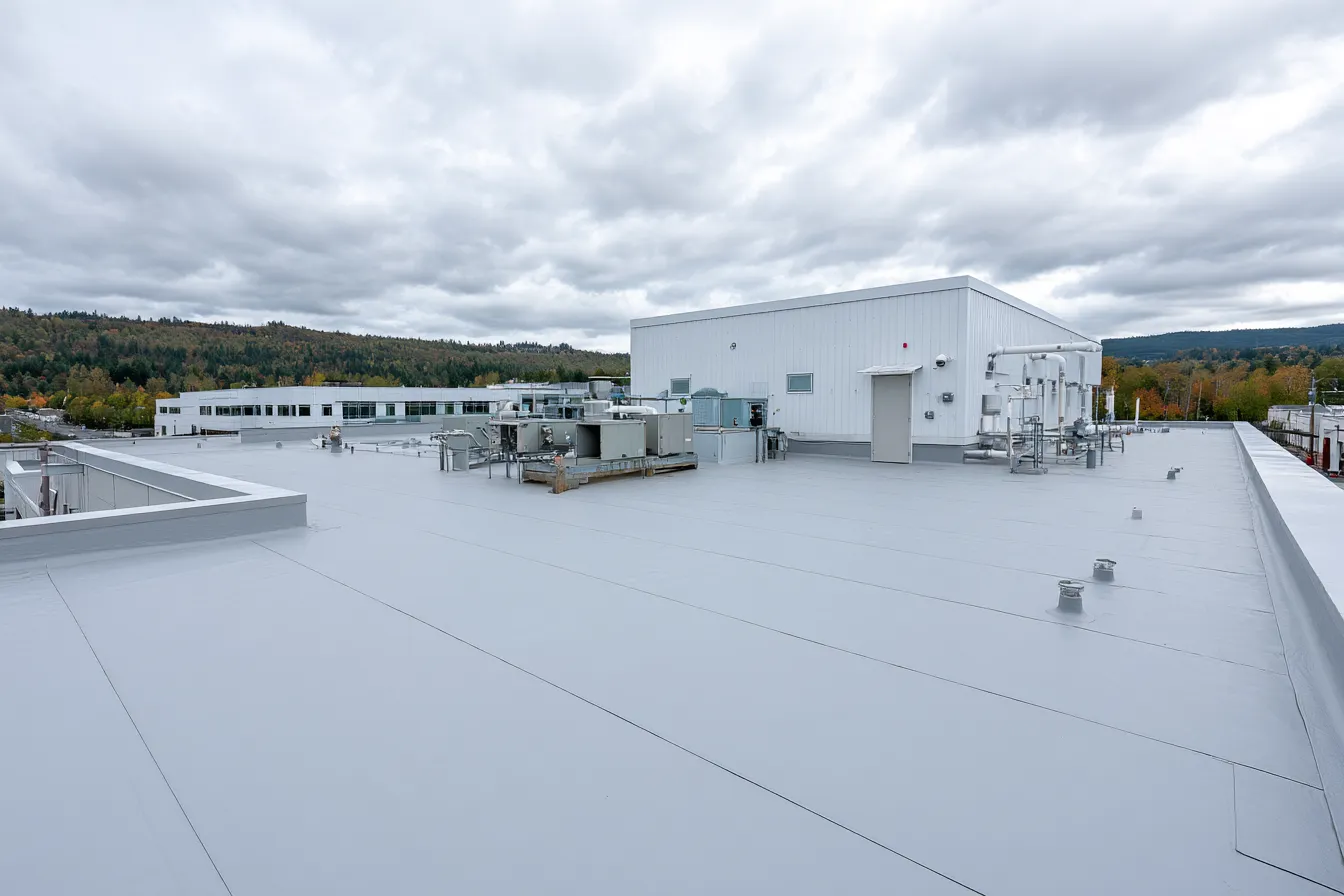
A commercial flat roof in Euless, TX is the wide low-slope deck over a distribution center, freight warehouse, or big-box store, built to drain rather than lie level. When one leaks, the fault is almost always at a drain, a seam, or a tie-in.
- Drainage walked drain by drain before a price
- The membrane you have, named before the one you need
- Recover or tear-off, called plainly on a big deck
Call (817) 318-7069
What a commercial flat roof faces in Euless
A flat roof is not truly flat; it is a low-slope deck pitched just enough to walk water to its drains. The largest of them in Euless sit over the distribution and freight buildings strung along SH-360 and the roads feeding DFW Airport.
On a roof that size, a small unfixed fault turns into a big interior loss fast. A roofer walks the drainage, tests the seams and every rooftop penetration, and probes the insulation for water already inside the assembly, then records what is there before pricing a repair, a recover, or a full replacement.
What a flat-roof read settles
Whether the honest answer is a patch or a whole new membrane, it rests on a short set of checks an owner can watch a roofer make before a figure lands.
- 01First, what membrane is actually up there
- Before anyone talks about what the roof needs, a roofer names what it has, since a single-ply sheet, a layered built-up or modified-bitumen roof, and an already-coated deck each age and repair differently. EPDM, a synthetic-rubber sheet, runs for decades across a wide open warehouse; a welded TPO membrane trades some of that for a lighter, reflective surface. The system on your building drives everything that follows.
- 02Whether the water actually leaves
- A low-slope roof only works if every drain, scupper, and internal leader carries water off it, so a roofer clears and watches each one. The code assumes a primary drain will clog someday and calls for overflow drainage to take over, which is no formality on an acre of roof when a North Texas cell dumps hard and the deck has to shed it before the weight builds.
- 03Ponding, and the weight it adds
- Water that sits instead of running off is a flat roof's slow killer: it works into any tired seam and, on a broad deck, a low spot only a fraction of an inch deep can pool a surprising amount of weight. A roofer maps the low spots and the sluggish drains and, where the slope itself is the problem, prices tapered insulation to build the pitch back rather than just chasing leaks.
- 04The tie-ins where new meets old
- Expansions, added rooftop units, and section re-roofs all leave a seam where fresh membrane marries the existing sheet, and a warehouse that has grown over the years can carry several such joints. A tie-in between two ages or two types of membrane is a classic leak start, so a roofer details each transition to hold rather than letting it become the next drip over the floor.
- 05Recover versus tear-off on a big deck
- Laying a new membrane over the old one, a recover, can save serious money on a warehouse-scale roof, but it is not always allowed: the code bars it once a roof already carries two coverings or the insulation beneath has gone wet, and then the sound job is stripping to the deck. A roofer counts the layers and probes for trapped moisture before recommending either, because a recover over a wet roof only entombs the problem.
Hail is no gentler on a flat roof than a pitched one; it just conceals the hit, bruising a membrane or splitting a seam in a way the parking lot never shows. A roofer gets up on the deck, documents and dates the damage, and where the sheet is worn but still sound, the roof coatings page covers renewing it instead of tearing it off.
What Euless owners ask about flat roofs
Clear answers on membranes, drainage, tie-ins, and Tarrant County hail for a Euless low-slope roof.
Q1TPO, EPDM, PVC, or built-up, which belongs on my building?
Q2Why does my roof pool water instead of draining it?
Q3Can we re-roof over what is there, or does it all have to come off?
Q4How can hail hurt a roof I cannot even see from below?
Q5How do you decide between repairing and replacing?
Get your Euless flat roof read before it leaks
Bring your building to Euless Roofing Co and a local commercial roofer walks every drain, tests the seams and tie-ins, probes the insulation for trapped water, and writes one scope covering a repair, a recover, or a new membrane. The read costs nothing and is yours to keep, to act on now or park for the next budget cycle.