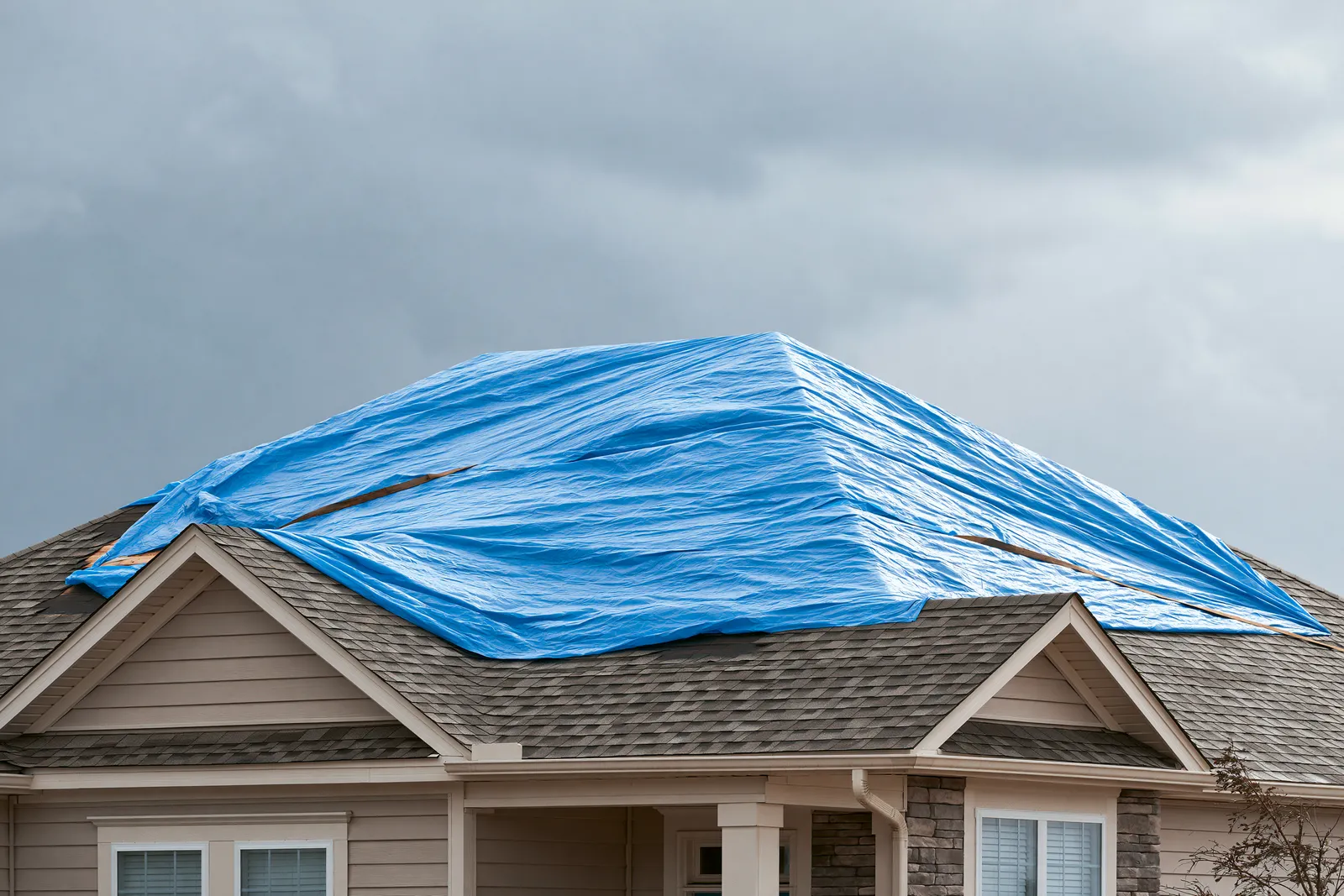
On the afternoon of May 27, 2024, one storm did something North Texas hail rarely does so cleanly: it landed on the whole Hurst-Euless-Bedford corridor at once. Baseball-size hail measured at 2.75 inches came down on Euless, and stones the same 2.75 inches were logged in Bedford and Hurst that same day, part of dozens of reports scattered across Tarrant County in a single pass. Two springs later, that afternoon is the local storm a lot of Euless roofs are still quietly carrying, whether or not a ceiling has stained yet. This is the story of what a stone that size does when it lands, where the May 2024 hit sits inside the wider Tarrant County record, and the short list to check before the next hard spring. A documented storm inspection is how any of it gets tied to a date.
What 2.75-inch hail does the moment it lands
Baseball-size hail is not a matter of degree; it is a different kind of hit. A 2.75 inch stone falls fast enough to strip the granules that shield an asphalt shingle and to dent the mat underneath, leaving a soft, bruised spot where the surface gives slightly under a thumb. Those granules are the shingle's sunscreen, so once they are gone the exposed asphalt starts breaking down in the Texas sun long before the bruise ever leaks.
The roof is rarely the only casualty. A stone that big also dents gutters, bends soft-metal vents, cracks skylights, and pocks the flashing, and those dents are useful, because they are the fingerprint the storm leaves at eye level. What a roofer reads on the roof is a scatter of bruises across a whole plane, matched to that soft-metal damage, not one odd mark, since hail this size does not strike a single shingle and quit.
One storm, the whole HEB corridor
What made May 27, 2024 unusual was its reach. The same afternoon put 2.75 inch hail on Euless, on Bedford, and on Hurst, three cities that share a build history as much as a border. The HEB corridor grew up together through the decades after the airport arrived, so a single cell crossing all three at once landed on a lot of roofs that were already the same age and already near the same decisions.
That matters because storm damage is not spread evenly by luck alone; it follows the track of the cell and the age of the roof. An older Euless roof that took 2.75 inch hail in 2024 aged years in an afternoon, while a newer roof a few streets over may have shrugged off the same stones. The only way to know which house is which is to look at the roof itself, slope by slope, rather than assume the neighbor's outcome is yours.
Where May 2024 sits in the county record
One storm is easier to weigh against the longer pattern, and Tarrant County keeps a real one. Over the last four years the NOAA storm record logs 33 separate hail days across the county and 230 hail reports, 195 of them at an inch or larger, the size where asphalt shingles start to take real damage. May 2024 was one heavy day inside a genuinely active stretch.
The extremes on that record put the corridor hit in context. The largest stone logged was 5.00 inches near Mansfield, in the south of the county, on June 12, 2023, closer to a grapefruit than a baseball. The peak wind was a 105 mph gust at Haltom City on March 4, 2025, strong enough to lift and crease shingles that hail never touched. Euless sits in the middle of all that, which is why a roof here earns a look after any hard county storm, not only its own.
- 33 hail days logged across Tarrant County in the last four years.
- 230 hail reports, 195 of them one inch or larger.
- 5.00 inch hail near Mansfield on June 12, 2023, the county ceiling.
- 105 mph wind at Haltom City on March 4, 2025, the peak gust.
What to check now, before the next spring
You do not need a ladder to get a first read, and after a stone that size the clues sit lower than the roof. If the softer targets below took hits, the shingles almost certainly did too, and a few minutes on the ground can tell you whether a closer look is worth booking.
What a ground check cannot do is settle a claim or stand in for a real inspection, so treat it as the reason to call, not the final answer.
- Walk the perimeter and check the gutters and downspouts for fresh dents or dings.
- Look at metal vents and the air-conditioner fins for soft, round dimples.
- Check window screens for tears and look for shingle granules pooled at the splash blocks.
- Go into the attic with a flashlight and scan the decking, chimney, and vents for a damp stain or a pinhole of daylight.
- If any of that turns up, book a documented, dated roof inspection before you call it settled.
Two years on, the storm date still matters
Here is the part that surprises people: hail damage from May 2024 may only be surfacing now. A bruised shingle often holds water out for a season or two, then cracks and lets the next hard rain through, which is why a leak in 2026 can trace straight back to a stone that fell in 2024. The damage was done on the storm day; the symptom just took its time.
That gap is why the date still counts. Texas homeowner policies generally ask you to report a hail loss within a set window of the day it happened, so pinning damage to the documented May 27, 2024 event, rather than to a vague last couple of years, is what keeps the cause clear. If a claim is anywhere in your thinking, the insurance claim guide walks through how that timeline runs, and a replacement estimate tells you what the roof itself would take.
Not sure whether a recent Euless hail day reached your roof? Tell Euless Roofing Co what you saw, and a local roofer will follow up with a free, documented inspection so you know where the roof stands, in writing.
Contact us Call (817) 318-7069